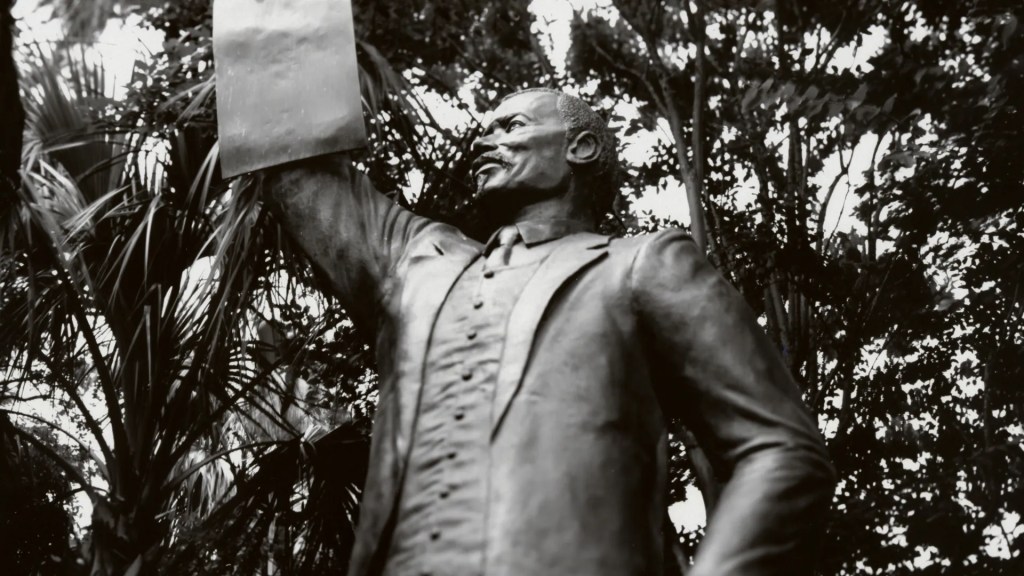
In the summer of 1865, the good news of freedom finally came to the over two hundred fifty thousand enslaved persons of Texas. It came in the form of a general order from Major-General Gordon Granger of the Union Army. Its first sentence was the most important.
“The people of Texas are informed that, in accordance with a proclamation from the Executive of the United States, all slaves are free.”
The proclamation referred to was the Emancipation Proclamation, which should have freed them in 1863, but Texas was a Confederate stronghold at that time and refused to recognize it. Two years late, but no less important, June 19, 1865 became a watershed moment for Black Texans. It marked the beginning of their collective freedom and the start of chattel slavery’s final demise in the United States. While the Thirteenth Amendment officially ended slavery in substance, June 19th became the unofficial holiday Black Texans passed down from generation to generation. They called it Juneteenth and celebrated the anniversary of their freedom on that day. To get all Texans to recognize the importance of that day became the mission of Albert Ely Edwards.
Edwards was serving in the Texas House of Representatives in 1979 when he first began to push House Bill 1016 to make Juneteenth an official holiday in Texas. He brought his experience as a community organizer and veteran of the Civil Rights Movement to his newly spawned political career, which had just begun a year before. But in addition to experience, he brought his faith as a third-generation dedicated Baptist, and he succeeded. More than one hundred years after the first Juneteenth, Texas became the first state to officially recognize it, setting the precedent for making it a federal holiday.
Success did not come easily to Representative Edwards, as it was a test of his endurance, political savvy, and willingness to compromise with others to bring together the needed coalition to get his bill passed in a majority white legislative body. Speaking about his initial efforts in a History Makers interview, he bemoaned, “When I would go to white legislators with my flow chart to check off who I had and who I didn’t have, my first time around, they all said no.”
The endurance that led to Edwards’ success was not produced by happenstance but was shaped by his family’s travailing faith, which had endured through slavery, Reconstruction, the rise of Jim Crow, and the Civil Rights Movement. As regular celebrants of Juneteenth, Edwards’ family inherited the power of its legacy and helped to carry it forward.
Juneteenth, and the overall end of chattel slavery in the United States, was viewed by many Blacks as an answered prayer and a long-prophesied day. Accounts of the formerly enslaved recorded after the Civil War, such as Mary Livermore’s My Story of the War, testify to this reality.
In the book, Livermore gives voice to a former slave known as Aunt Aggy, who declared in her prayers during slavery that “There’s a day a-comin’,” signifying her belief that slavery was not the final destiny of Blacks in America. She would pray, “Oh, Lord! Roll on the chariots, and give the black people rest and peace.”
For a time, rest and peace came to Blacks at the end of the Civil War and during the short-lived period of Reconstruction.
Reconstruction brought to the South abolitionist governments backed by Union forces and, for a while, sparked the dream of a better life, as General Granger’s order announced not only freedom but “absolute equality of personal rights” between the races. For the first time, Blacks were equals under the law, office holders, and a major voting force in the South. The future seemed incredibly bright. Unfortunately, this era of respite did not last.
The end of Reconstruction gave way to the rise of Jim Crow, and the exit of Union forces from the South helped to lay the path for former Confederates to regain political power and reestablish the antebellum racial hierarchy. This reordering was held in place by racialized violence, most often in the form of lynching. The practice became so ubiquitous that it inspired Mark Twain’s dissenting essay, “The United States of Lyncherdom.”
In these bleak circumstances, Edwards’ family did not sink into despair. On the contrary, they planted a church in his hometown of Houston, Texas, to bring light into the darkness.
The church was, as he described, initially “headed up” by his maternal grandmother, Eugenia Radford, and eventually came to be pastored by his paternal grandfather, Reddick Edwards. Edwards’ father, Eldridge Edwards, eventually became the church’s pastor, with his mother, Josephine Radford Edwards, playing a supporting role.
Eldridge typified the large, central role of the pastor in Black communities of the early twentieth century. Describing this reality, WEB DuBois noted in Souls of Black Folk, that the “Negro church” of that time was “the social center of Negro life in the United States.” Moreover, pastors were its driving force.
As such, in his poor, sharecropping setting, Eldridge helped ensure the community’s practical needs were met, advocated for their political rights, and, importantly, exhibited a self-respect that would not bow to white supremacist notions.
Rejecting notions of racial inferiority, when Edwards came of age, he enrolled in Texas Southern University and participated in the school’s student-led direct action civil rights efforts. Joining marches and sit-ins became a natural extension of what he saw his father doing for the community.
From his father, the burgeoning political leader gleaned the model of faith-filled activism. Reflecting on the power of his father’s example, he remarked, “He was a minister, a Baptist minister. I’m a Baptist minister. He was involved in his community. I’m involved in the community. So, I just got a whole lot from him.”
Eldridge and Josephine provided a seedbed for Albert and his siblings’ faith to grow and flourish, and as an outgrowth of that faith, they created habits of self-respect and healthy pride in them.
Juneteenth was celebrated by the family each year, and as Edwards recounted, his parents taught them “the significance of what that day really meant.” For Edwards, as he created the legislation that gave Juneteenth its first ascendance in 1979, he saw it as a symbol of Black freedom, an invitation to celebrants from any background to learn about Black history, and as a medium to foster self-respect in Black youth.
Representative Albert Edwards accomplished something great in bringing Juneteenth’s recognition out of the siloes of Black acknowledgement alone, but what is even more amazing is the faith community that produced the man who did it. It is a testament to the impact of the Black Church when, like Edwards’ family, we refuse to draw back in despondency in dark socio-political times. As his family’s legacy demonstrates, a faith that endures eventually produces fruit that will bless the world around us.


Leave a Reply